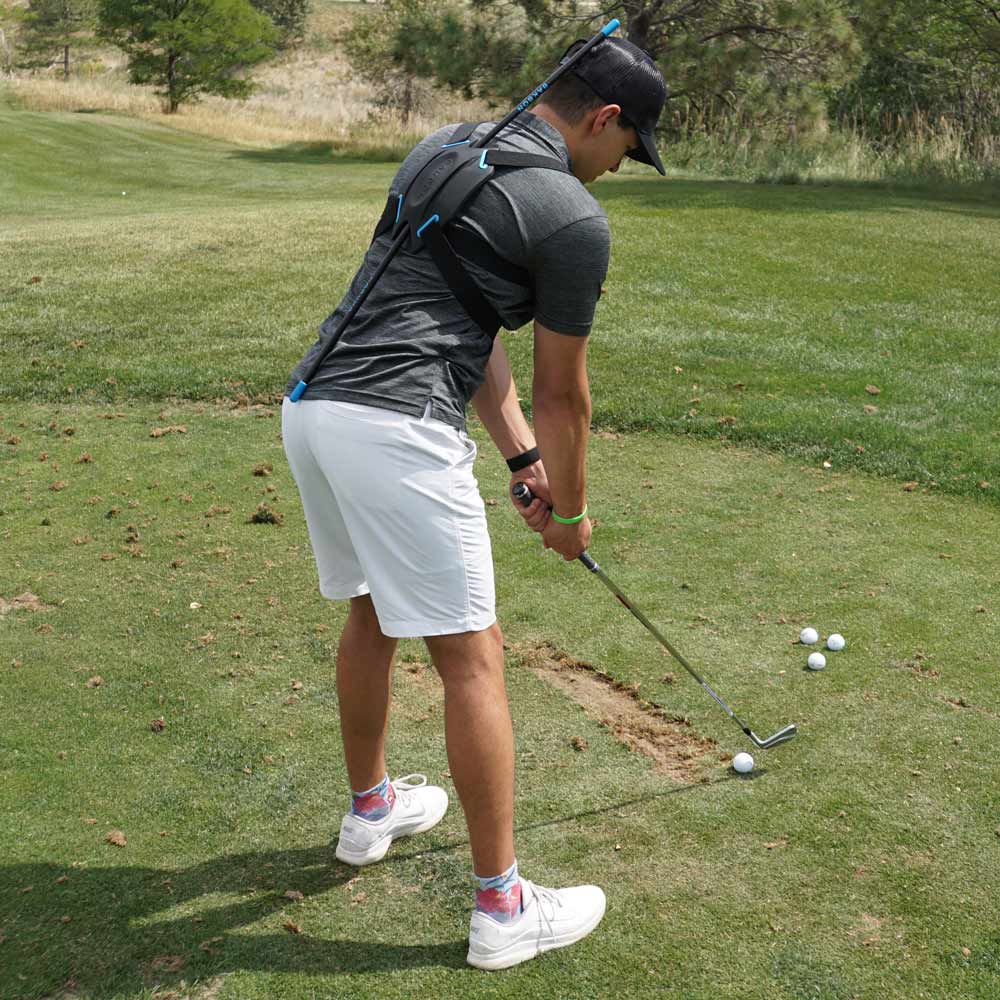
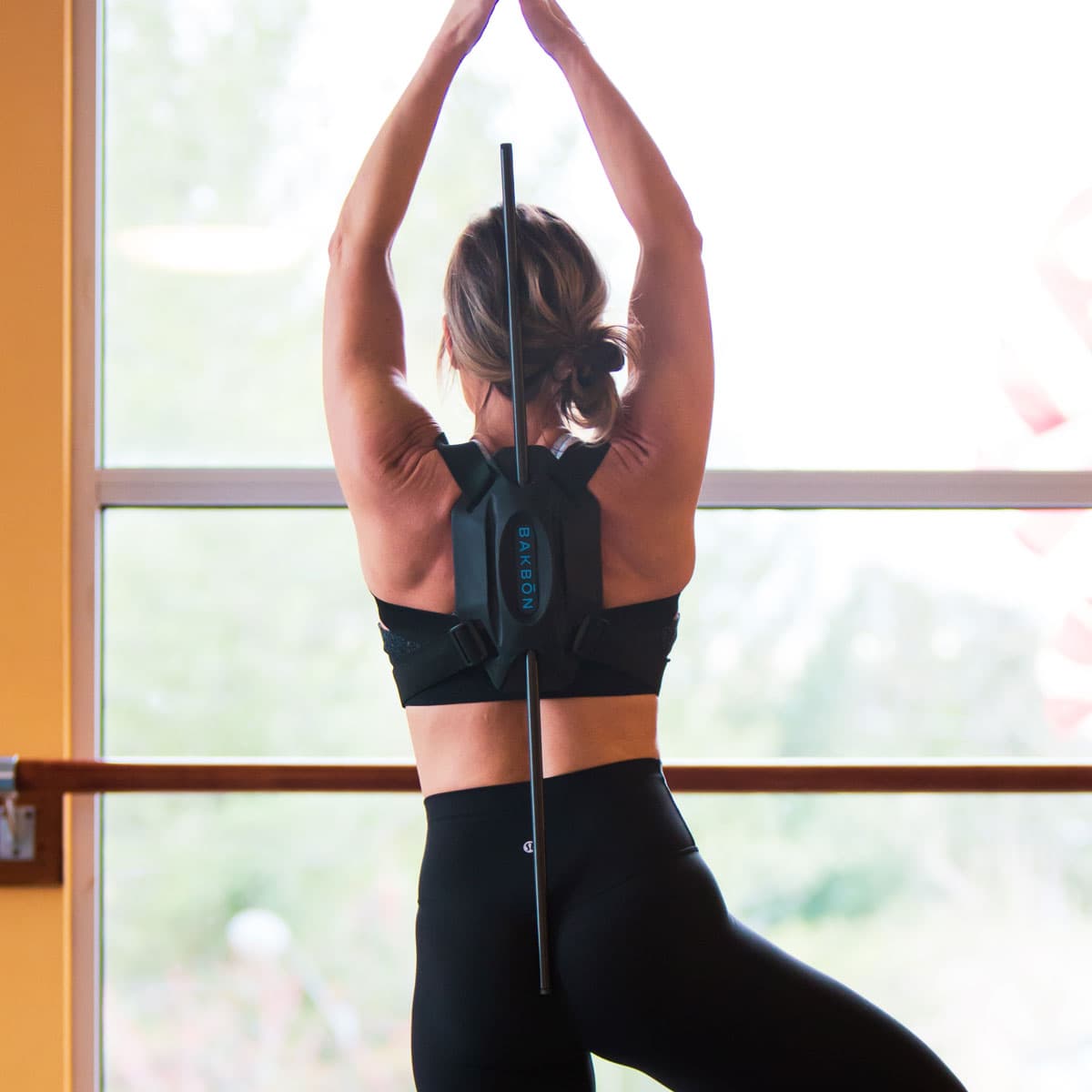
The hybrid-work posture problem is not a single problem. It's seven problems stacked on top of each other. I see them in the clinic every week, in this order of frequency: forward head, rounded thoracic, anterior-tilted pelvis, internally rotated shoulders, flared ribs, tight hip flexors, and weak deep cervical flexors. Each one compounds the next. Treating them in isolation is why most 'desk posture' advice doesn't work.
Cue 1 — Wall occiput distance, once per hour
Stand with your heels, sacrum, and mid-back against a wall. Measure the distance from the back of your head to the wall. If it's more than a finger's width, you have measurable forward head posture. This is the single fastest self-assessment in the literature and it takes ten seconds.
Cue 2 — Rib cage stacked over pelvis
Most desk workers flare their ribs forward to compensate for a tucked pelvis. The fix is not 'sit up straight.' The fix is to feel the bottom of the sternum dropping toward the pubic bone while the ribs stay soft. This is the position BAKBŌN's chassis cues automatically.
Cue 3 — The chin tuck done properly
Most people do chin tucks wrong. They jam their chin down into their neck, which activates the SCM and scalenes — exactly the muscles you're trying to quiet. Correct cue: slide the back of your skull straight back over your shoulders without tilting the head down. Imagine you're creating a double chin without looking down.
Cue 4 — Scapular setting, not retraction
The 'pull your shoulders back' cue is wrong for most desk workers. It creates a compensatory upper trap dominance. Better: let the scapulae rest heavy on the rib cage, then imagine sliding them slightly down your back. Lower trap and mid-trap activation without upper trap recruitment.
Cue 5 — Hip-hinge, not a tilt
Most desk chairs encourage a posterior pelvic tilt. The correction is not an anterior tilt (that's a different compensation). The correction is a neutral hip hinge — the pelvis stacked directly over the sit bones, not rolled forward or back. Sit bones pointing down into the chair, not forward or backward.
Cue 6 — Feet flat, weight distributed
Three contact points: sit bones, feet, and occasionally forearms on the desk. If your feet are floating, your pelvis is compensating. If your forearms are supporting all your upper body weight, your scapulae are protracting. A stool or a riser fixes one. Elbow support at 90 degrees fixes the other.
Cue 7 — Move every 30 minutes — with BAKBŌN on
Static posture is not the answer to bad posture. The answer is frequent re-organization. Stand every 30 minutes. Walk the floor. Do one thoracic extension over the back of your chair. Sit back down. If BAKBŌN is worn through this cycle, the cue lands every time you return to the desk — and the nervous system encodes the pattern faster than any cognitive reminder system can.
"BAKBŌN makes achieving neutral spine easy and functional for my patients. From high-level athletes to the aging population, BAKBŌN provides the user feedback and the ability to work independently through exercises while simultaneously achieving neutral spine."
A 15-minute desk protocol
- —Morning — 5 min wearing BAKBŌN while answering email. Just notice the three contact points.
- —Midday — 5 min wearing BAKBŌN during a standing meeting or on a call. Walk while wearing it.
- —End-of-day — 5 min wearing BAKBŌN during the last block of focused work. Pattern sticks strongest at the end of the day.
Fifteen minutes is enough. You are not trying to hold posture for eight hours. You are training the pattern so the other seven hours and forty-five minutes are measurably better than they are today.