Patients come into the clinic and ask the same question. They've read the word 'neutral' in a dozen YouTube videos and a Reddit thread and a Peloton class. Nobody has told them what it feels like. I've been a rehab chiropractor for thirty years. This is the single question I answer most.
Neutral spine is three things at once: occiput aligned over the mid-thoracic vertebrae, scapulae resting on the rib cage without protraction or retraction, and a lumbar curve that holds its natural lordosis without hyperextending. That's the technical answer. The practical answer is a sensation — an absence of strain in the paraspinals, an easy unlabored breath, a feeling that the skeleton is doing the job instead of the muscles.
Why internal cues fail novices
'Tuck your pelvis, retract your scapulae, lengthen the crown of the head.' I've said those words ten thousand times. They work for experienced movers — dancers, Pilates instructors, gymnasts, advanced yoga practitioners. They fail almost everyone else.
The literature is unambiguous on why. Gabriele Wulf's 2013 meta-review on attentional focus and the ~100 follow-on studies show external attentional focus outperforms internal focus for motor learning in novices. Telling a patient to 'think about a string pulling the top of your head toward the ceiling' works. Telling them to 'contract your multifidus' does not. Sepehri et al. 2024 — a 22-study systematic review on Upper Crossed Syndrome published in BMC Musculoskeletal Disorders — found the same thing. Tell someone what to feel, not what to do.
"Light touch reduces postural sway and end-point error even without mechanical support."
Why tactile cueing works — the fingertip-on-a-chair principle
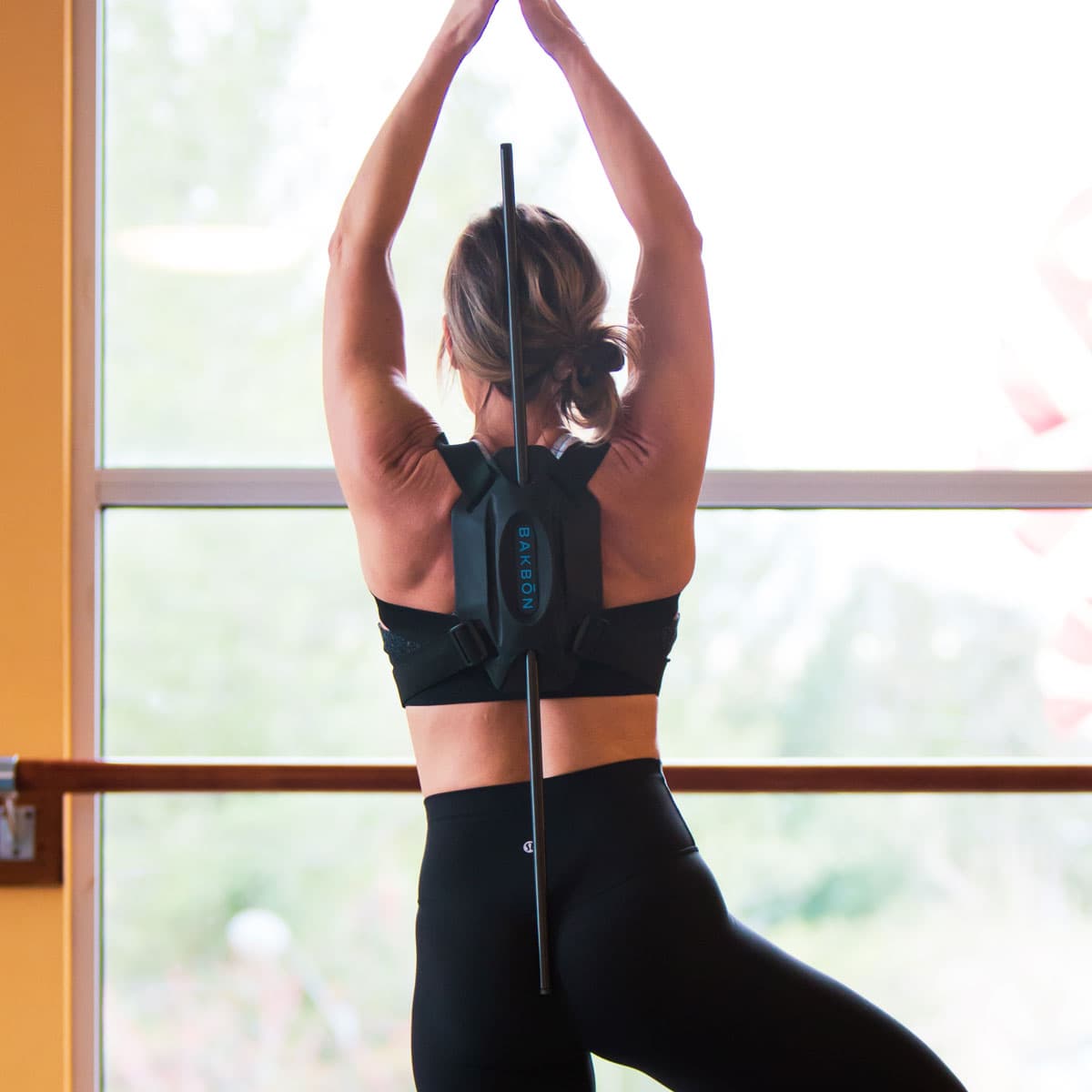
The brain treats light touch as auxiliary proprioception. Even feather-light contact at landmark points — C7, mid-thoracic, sacrum — measurably reduces postural sway on a force plate. Dancers do this with a single fingertip on a ballet barre. The nervous system loves a reference point, and given a fixed tactile landmark it will stabilize posture around that landmark without any conscious effort at all.
This is the single most under-appreciated fact in consumer posture correction. The market is full of devices trying to push your shoulders back with elastic. What actually works is giving the nervous system a reference surface so it can self-organize. Braces ask your conscious mind to fight gravity. Cueing lets your autonomic motor system do what it already knows how to do.
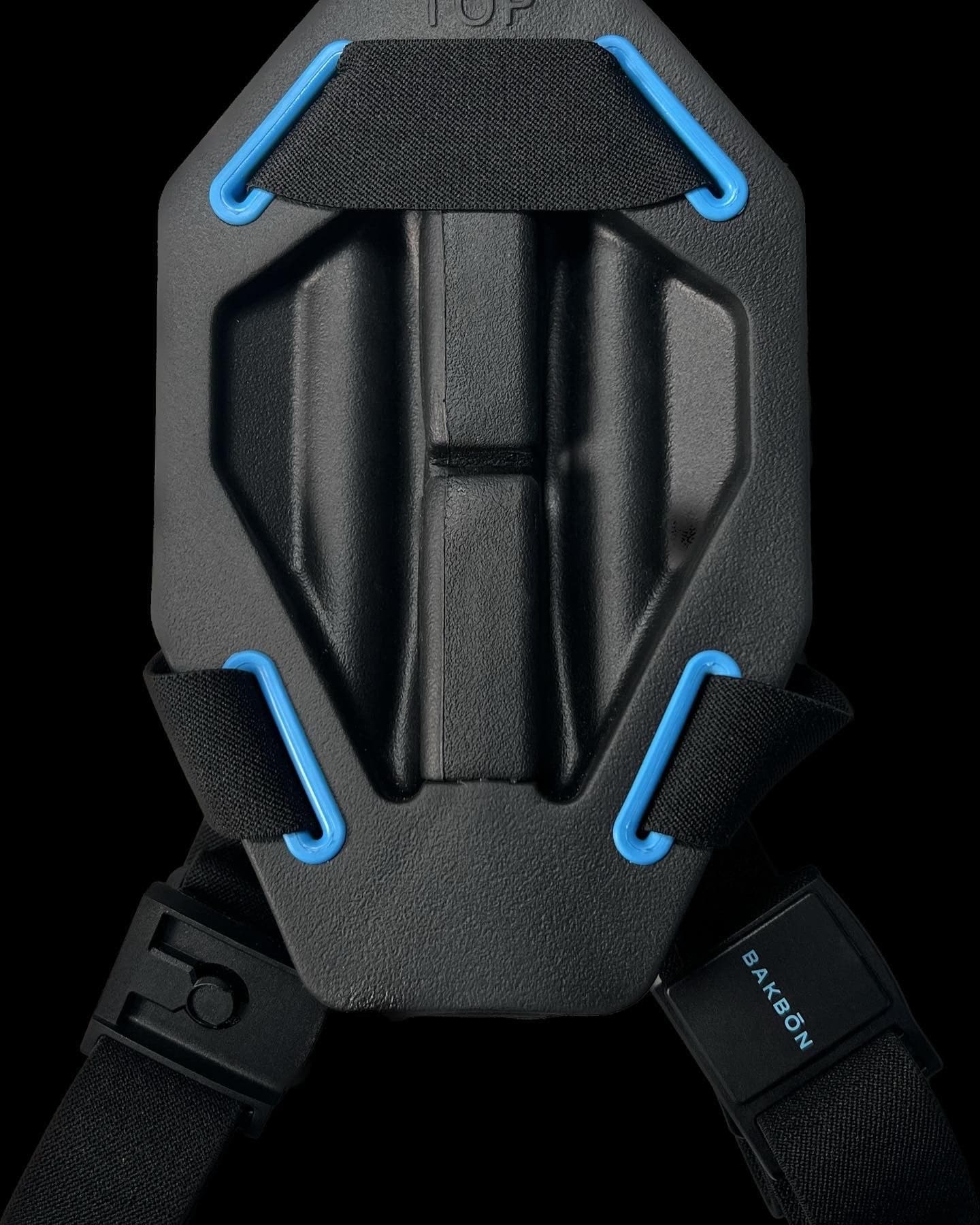
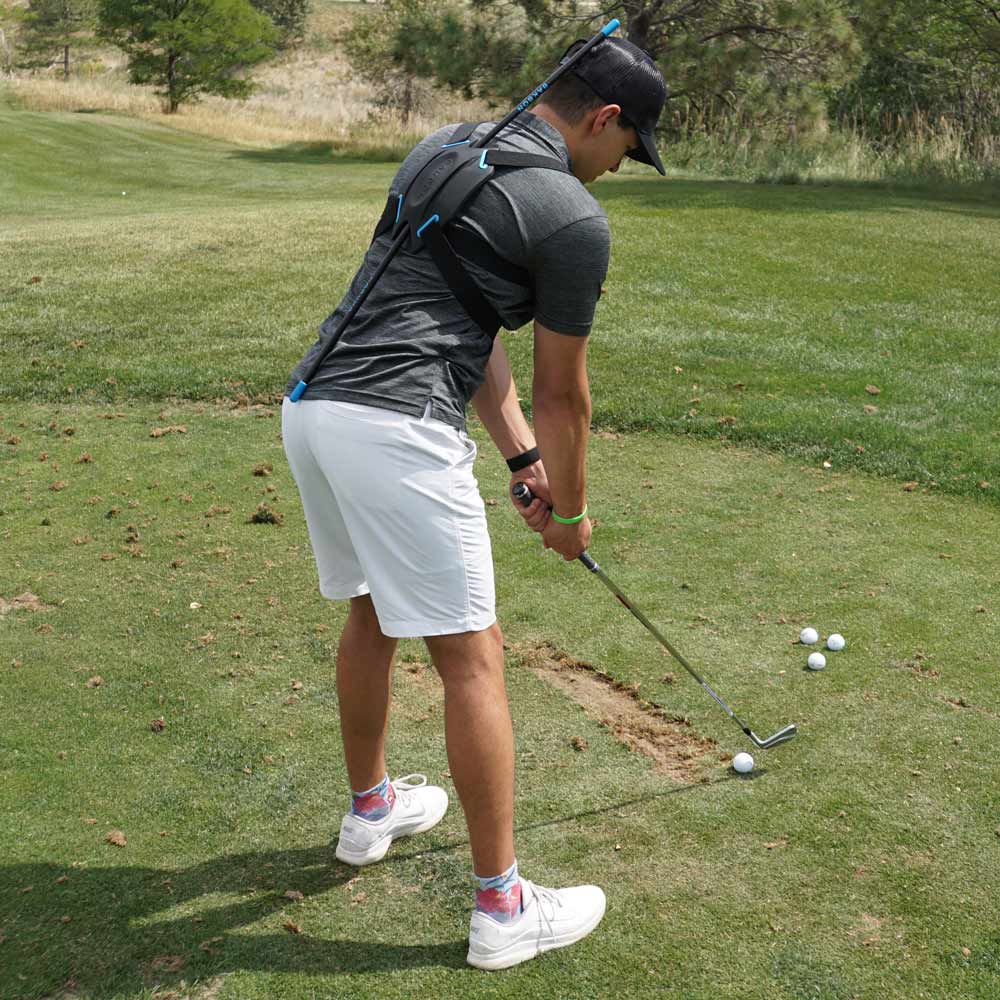
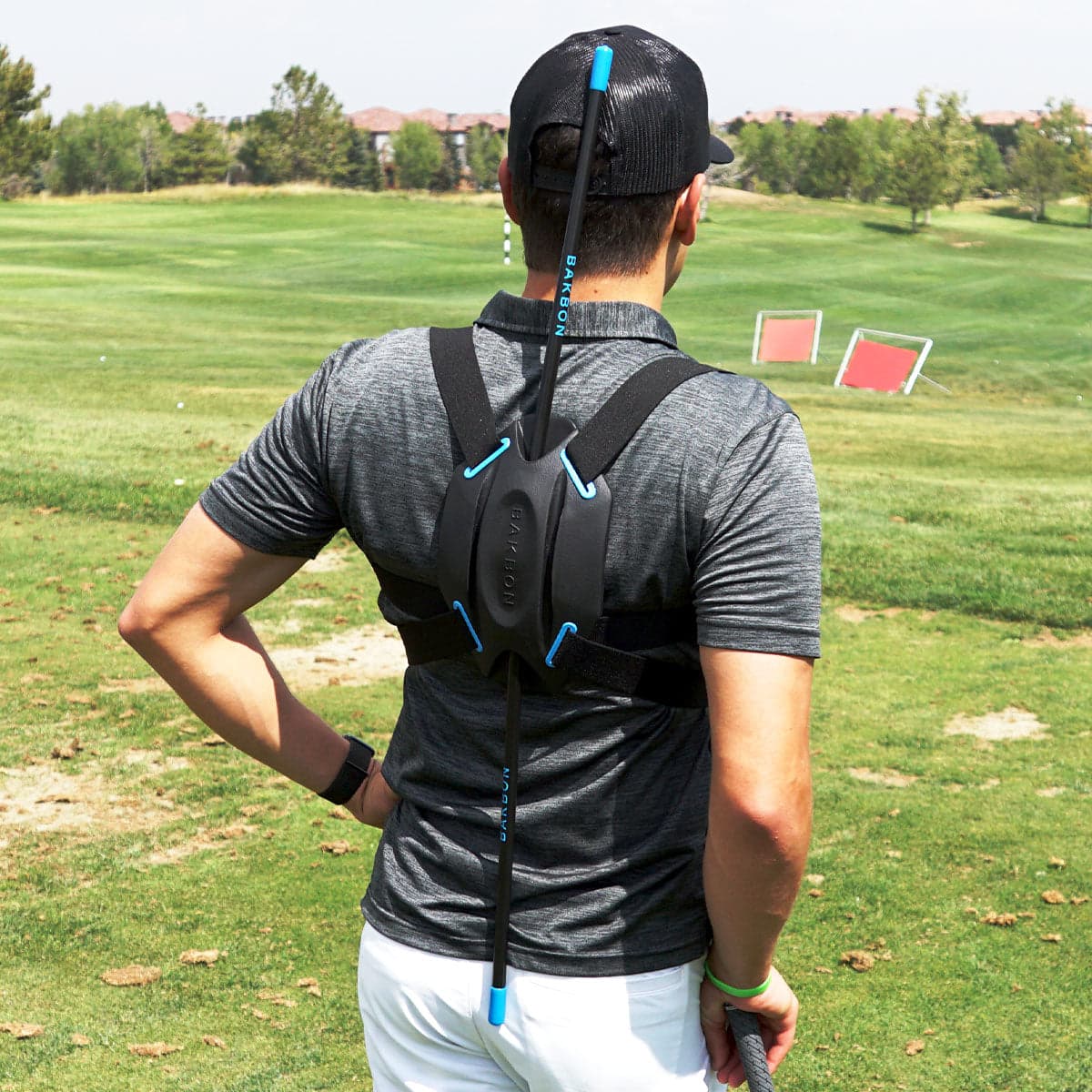
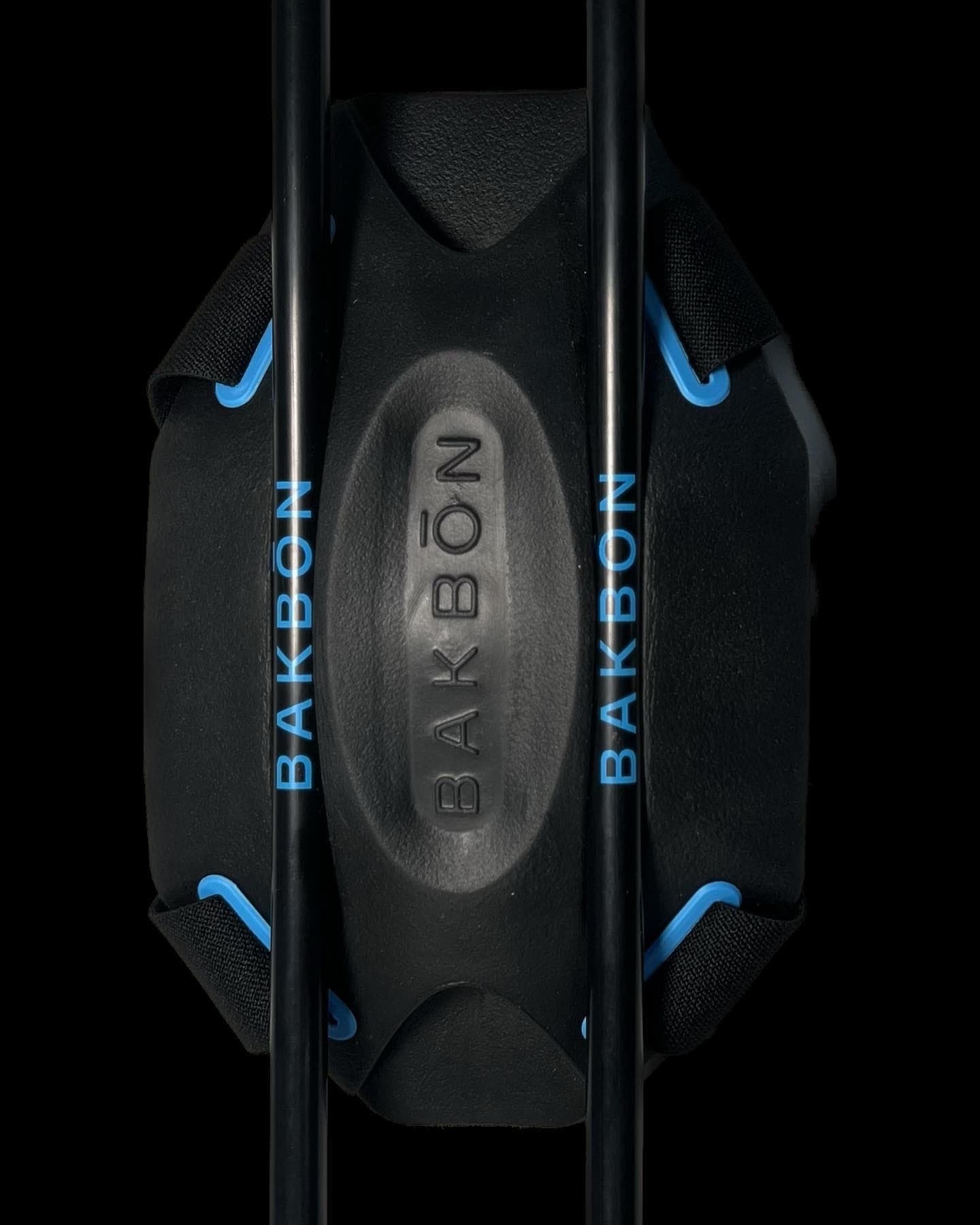
BAKBŌN delivers that reference continuously. The pole contacts your cervical and sacral references simultaneously. The chassis anchors the thoracic. Your body finds center because three reference points are held constant — and the nervous system, given three fixed landmarks, computes the fourth automatically.
What I tell my patients on the first visit
Wear it for ten minutes. Don't think about form. Don't try to 'correct.' Just feel where the three contact points are. Let your body settle against them. That sensation — the one where your spine is letting the device do the thinking — is neutral. Memorize it. Come back to it later without the device.
After three weeks of fifteen-minute daily sessions, most of my patients can find neutral spine without BAKBŌN. That's the entire goal. This is a training wheels device. You outgrow it. What stays is the pattern.
What neutral is not
- —Not military posture — shoulders jammed back, chin locked. That's an end-range position, not neutral.
- —Not flat — the lumbar spine keeps its natural inward curve. A 'flat back' is a compensation, not a fix.
- —Not static — neutral is a range you return to, not a position you hold.
- —Not painful — if you're straining to maintain it, you're doing posture, not finding neutral.
If you take one thing from this: your nervous system already knows how to do this. It just needs a reference point. Give it three, and it will find the fourth on its own. That's what BAKBŌN is.