Hyperkyphosis in adults over sixty is one of the most under-treated and most consequential posture conditions in medicine. Prevalence runs between 20 and 40 percent depending on the definition used. It is associated with slower gait, increased fall risk, reduced pulmonary function, and excess all-cause mortality — the mortality signal independent of osteoporosis (Kado et al., multiple cohort studies).
That last point is worth pausing on. The muscle loss and structural changes that drive progressive thoracic kyphosis also drive the excess mortality signal. Correct the posture and you are not just buying cosmetic improvement — you are modifying an independent risk factor.
What the literature actually says
The SHEAF trial — Katzman et al., Osteoporosis International, 2017 — is the most methodologically tight randomized controlled trial on kyphosis reversal in older adults. Six months of supervised strengthening plus posture training produced effect sizes between 0.60 and 0.89 on Cobb angle measurements. Adherence was above 90% at home. That is extraordinary for a rehab intervention in a 60+ cohort, where drop-off at six months typically runs 40 to 60 percent.
The SHEAF protocol has four components the evidence supports:
- —Extension-biased exercise — thoracic extension over a T-spine foam roller, prone press-ups as tolerated
- —Scapular retraction strengthening — rhomboids and middle trapezius, progressive loading
- —Cervical retraction holds — 'chin tucks' performed with proper rib-cage stabilization
- —Proprioceptive training — finding and holding neutral spine during activities of daily living
What's unsafe in this population
Most consumer 'posture correctors' in this demographic force a movement pattern the evidence does not support. Elastic braces that pull the shoulders back passively can aggravate thoracic outlet symptoms in older adults, compress the already-narrowed subacromial space in shoulders with degenerative changes, and do nothing to build the strengthening stimulus the SHEAF protocol requires. A brace is the opposite of training.
The second unsafe pattern is adhesive-based wearables and app-dependent devices. Skin in adults over sixty is thinner and more prone to tearing; daily adhesive application is a real risk. App dependency adds a second barrier at exactly the demographic that has the most trouble with it. Both categories fail the population they're targeting.
"BAKBŌN provides the user feedback and the ability to work independently through exercises while simultaneously achieving neutral spine. Its ability to give external feedback while freeing the hands during movement provides a new lens in how we prescribe exercises for our patients."
Where BAKBŌN fits in a hyperkyphosis protocol
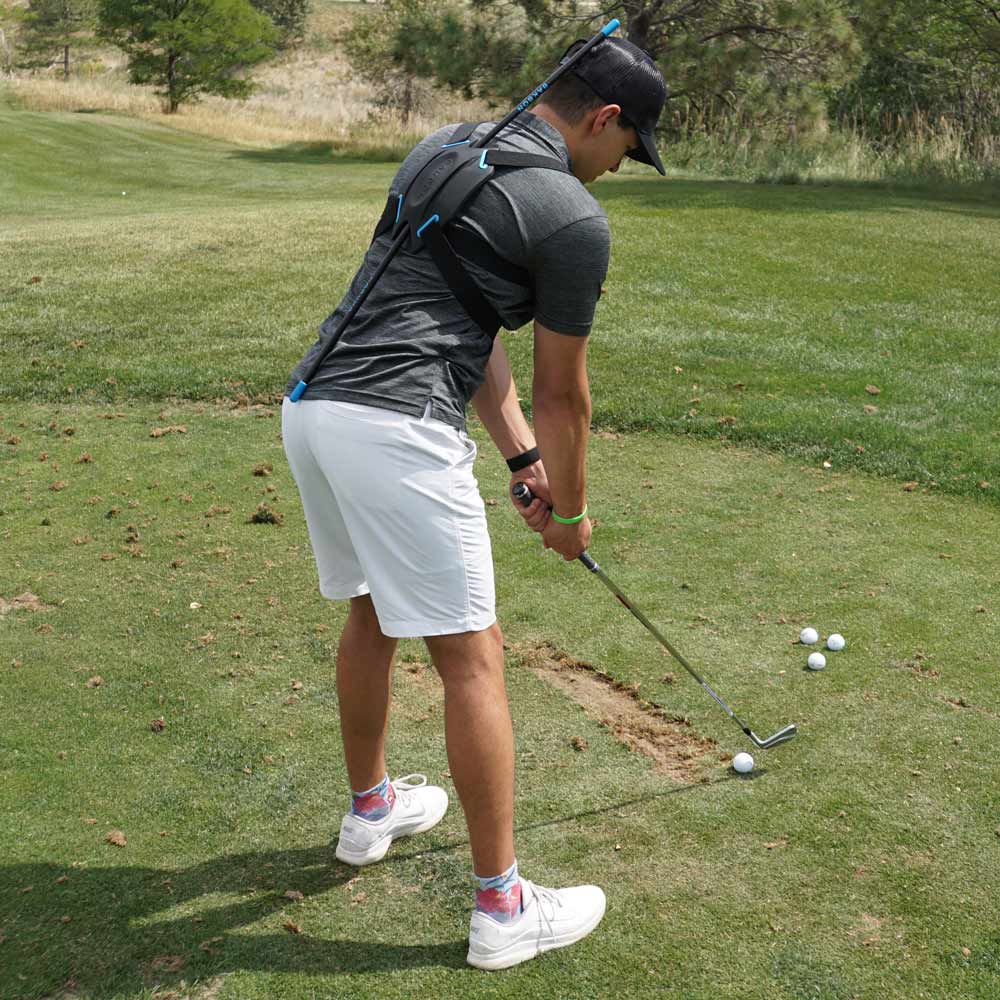
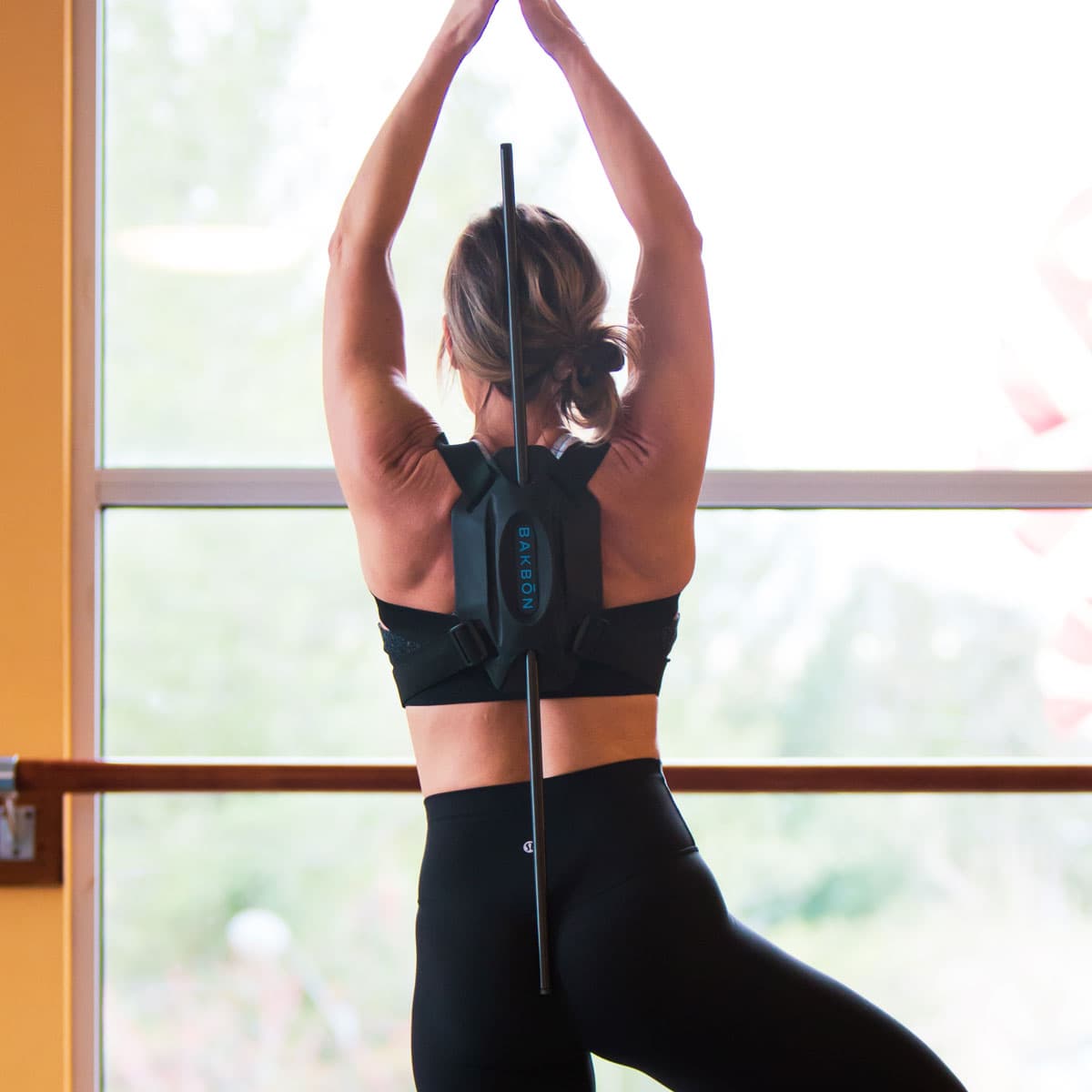
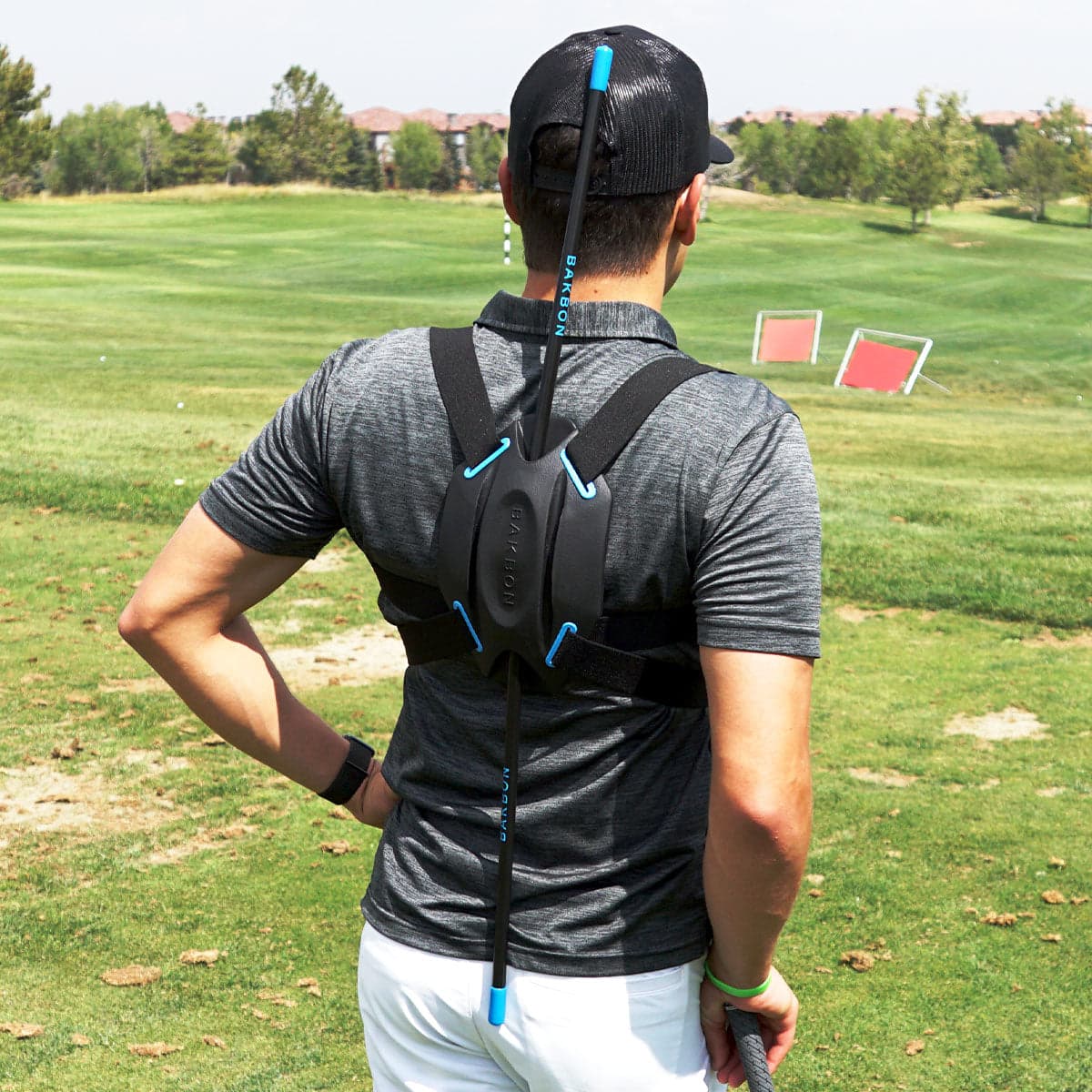
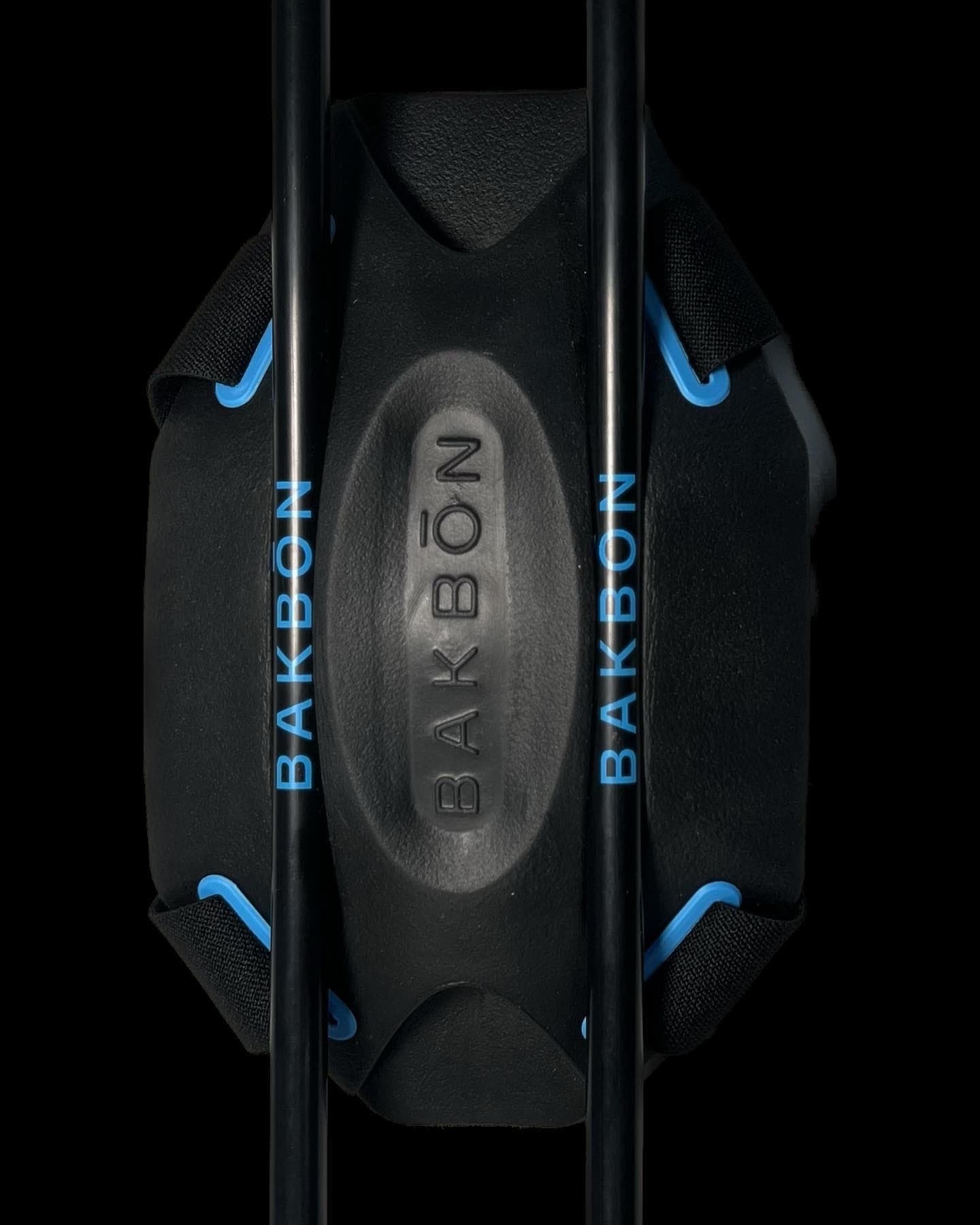
BAKBŌN is a cueing tool, not a brace. In this population it plays a specific role: the tactile reference for extension-biased exercise. Worn during prone press-ups and foam-roller extension, the pole gives the patient a continuous sense of whether they are achieving thoracic extension or compensating through the lumbar spine — the compensation pattern that turns a productive exercise into a harmful one.
Our 6-week protocol for 60+ patients
- —Weeks 1–2 — 10 min/day, seated and standing only, BAKBŌN alone. Goal: proprioceptive familiarity. No additional exercise.
- —Weeks 3–4 — 15 min/day. Add 2× weekly supervised or guided sessions of thoracic extension over a foam roller while wearing BAKBŌN. Introduce scapular retraction holds (10-second holds × 10 reps).
- —Weeks 5–6 — 20 min/day. Add prone press-ups (with physician clearance) and cervical retraction holds. Continue foam-roller extension.
- —Re-assess week 7 — measure Cobb angle if imaging is available, or use wall-occiput distance as a proxy. Most patients maintain the improvement with 3× weekly sessions thereafter.
HSA/FSA eligibility
BAKBŌN is HSA/FSA eligible through our checkout partner — a detail that matters more in this demographic than any other. A pre-tax $120 device on an HSA is effectively an $85 device. For patients on fixed income, that matters. For family members purchasing for a parent, it matters even more.
Hyperkyphosis is not a cosmetic problem. The mortality association is the reason to take it seriously. BAKBŌN is not a cure for it — nothing in the consumer category is. It is a proprioceptive training tool that makes the exercises that do work more effective, and more likely to actually get done.