Almost every physical therapist in North America owns a wooden dowel. It sits in a bin by the plinth, a stack of them by the door, three by the checkout counter. They hand it to low-back-pain patients with the same instruction: stand with your heels, sacrum, mid-back, and the back of your head touching the stick. Hold it vertically between your shoulder blades with both hands. Stay there for twenty minutes. Repeat daily.
It is arguably the most-prescribed home exercise in orthopedic physical therapy. It has been in Kisner & Colby's textbook since at least 1985. Its closest cousins show up in McKenzie extension protocols, Postural Restoration Institute cueing, Alexander Technique instruction, and yoga alignment manuals going back a century. And almost nobody does it for twenty minutes a day.
Why the dowel works
Why it works is more interesting than how it works. The four contact points — occiput, mid-thoracic, sacrum, and heels against the wall or floor — give your nervous system four unambiguous proprioceptive landmarks for neutral spine. Your brain doesn't have to compute posture. It can feel it. When you stand up later, the memory of those four pressure points is still there for a while. Habit formation is essentially your brain hunting for that pattern between sessions.
The mechanism is tactile cueing — light touch at landmark points functioning as auxiliary proprioception. Rabin et al. 2008 and the PNAS follow-on work showed that even feather-light contact reduces postural sway and end-point error without mechanical support. Your body treats a reference surface as information, not as a brace. That is the essential difference between the dowel and every elastic strap posture corrector you've ever seen advertised.
"BAKBŌN is one of the tools I use to help demonstrate and correct spinal, muscle, and joint imbalances, and improve the function of the nervous system."
Where the dowel fails — a compliance problem, not a biomechanics one
The dowel's compliance curve is terrible. Standing around your office holding a broomstick against your back for twenty minutes is not a behavior adults repeat. You try it Monday. You skip Tuesday. By Friday it's the thing on your desk you're supposed to be using but aren't. Ask any PT what percentage of their dowel-home-program patients actually complete twenty minutes a day and the answer is under five.
- —Two hands are occupied — you can't work, walk, cook, or move through a practice.
- —Intensity is binary — you're either holding it correctly or you're not. No graded feedback.
- —Posture habit is formed through movement, not static holds, so the very medium the dowel requires undermines the goal.
- —There's no wearable artifact to remind you — out of sight, out of routine.
What BAKBŌN actually changes
BAKBŌN exists because standing around holding a stick for twenty minutes a day is a compliance problem, not a biomechanics problem. The mechanical idea — four reference points, continuous tactile feedback, neutral spine self-cueing — is unchanged. What's new is the chassis. Build the cue points into the body. Free the hands. Let the memory form while people are moving.
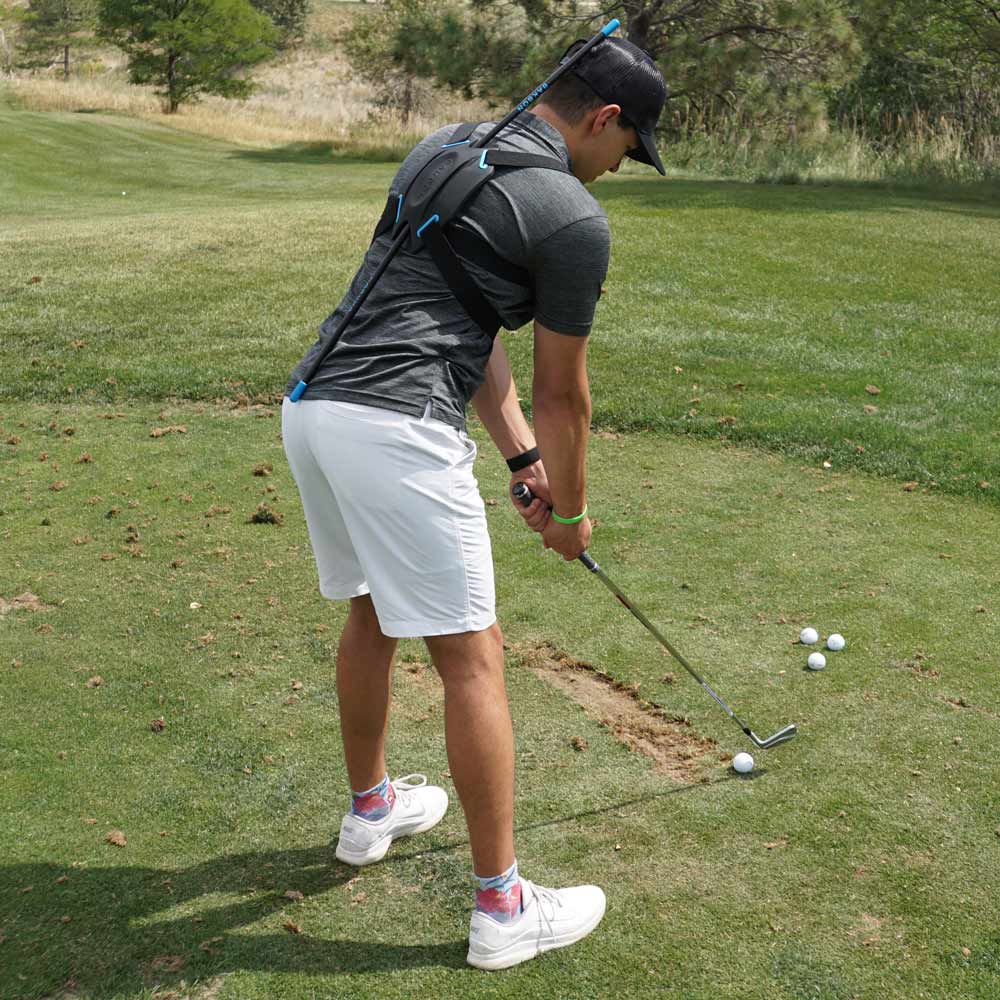
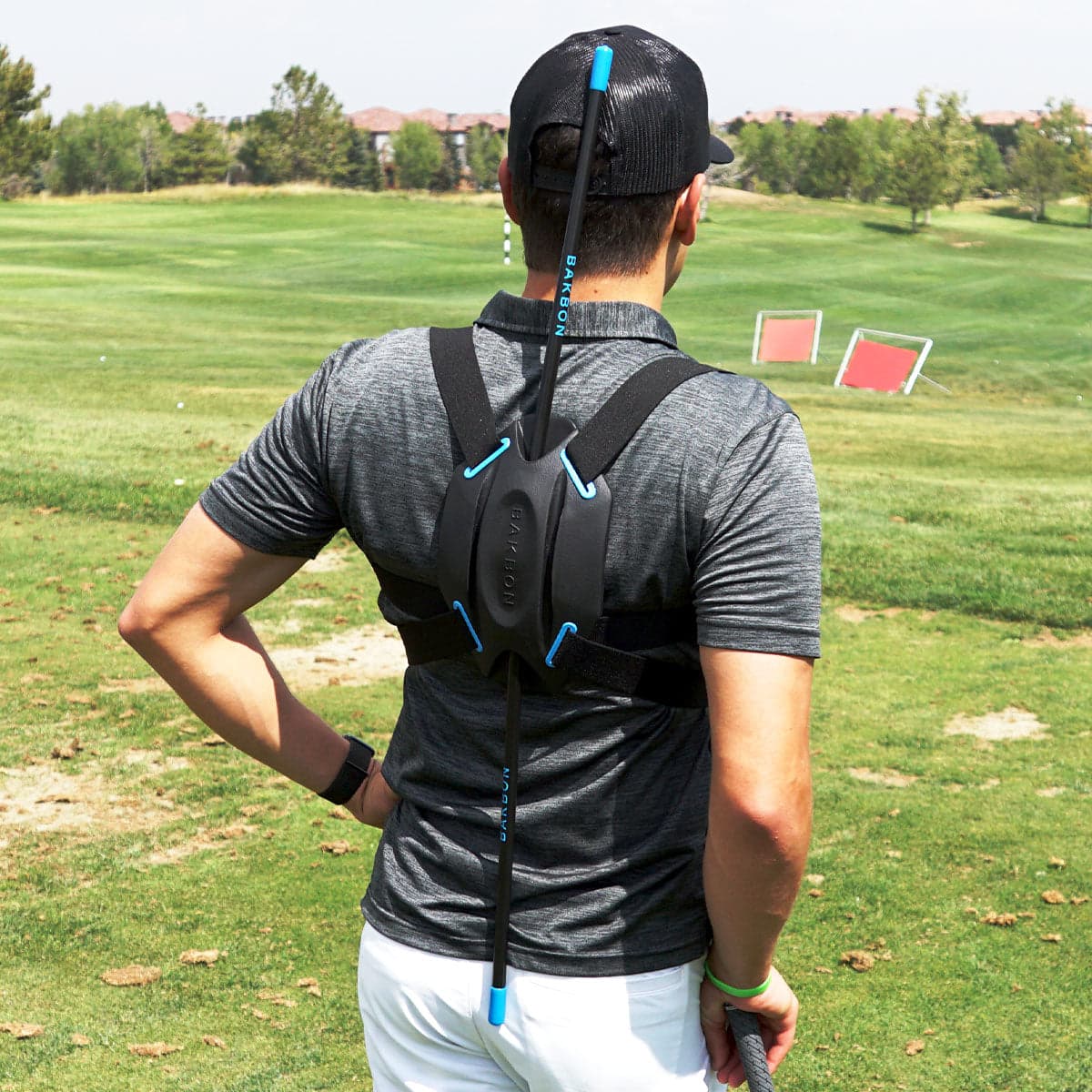
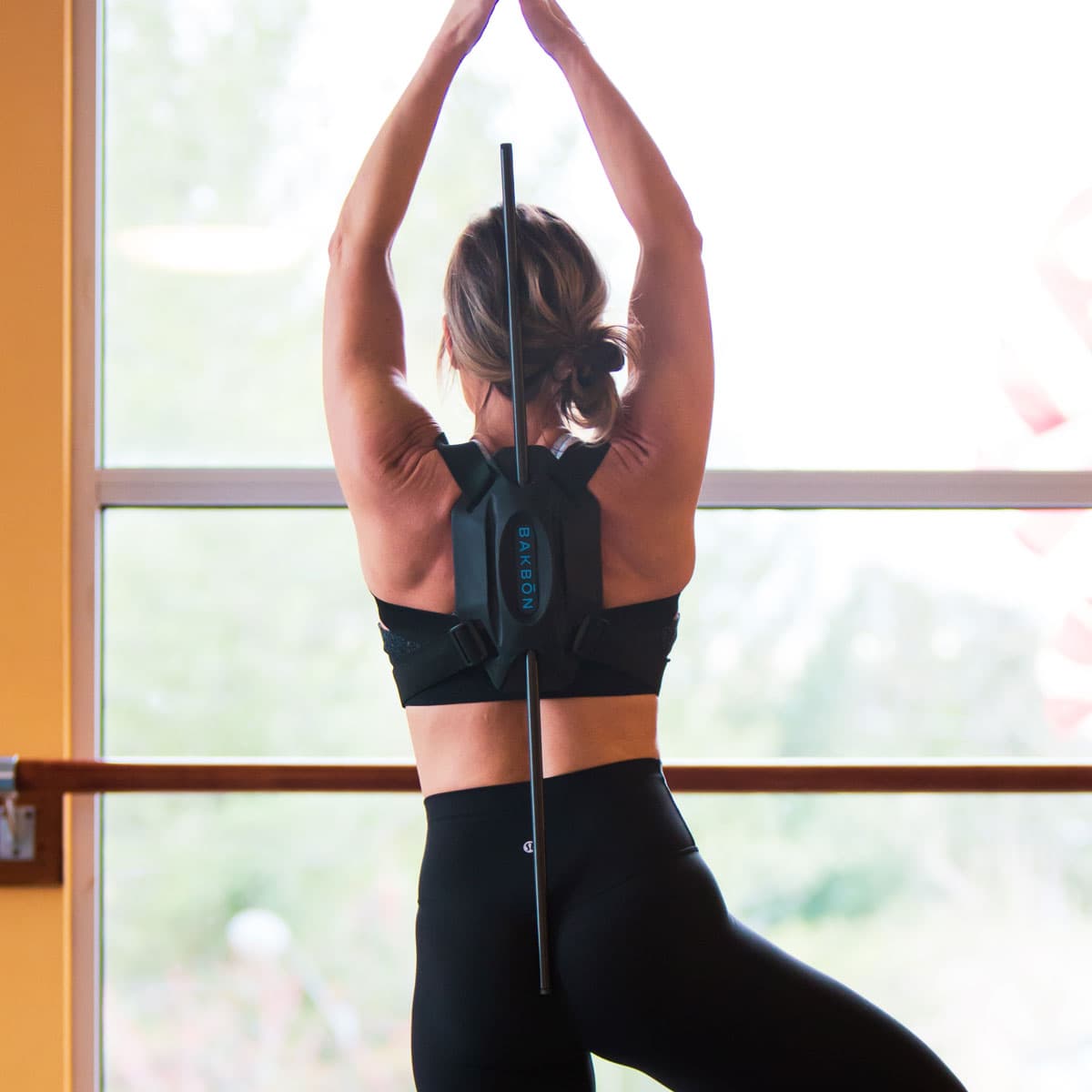
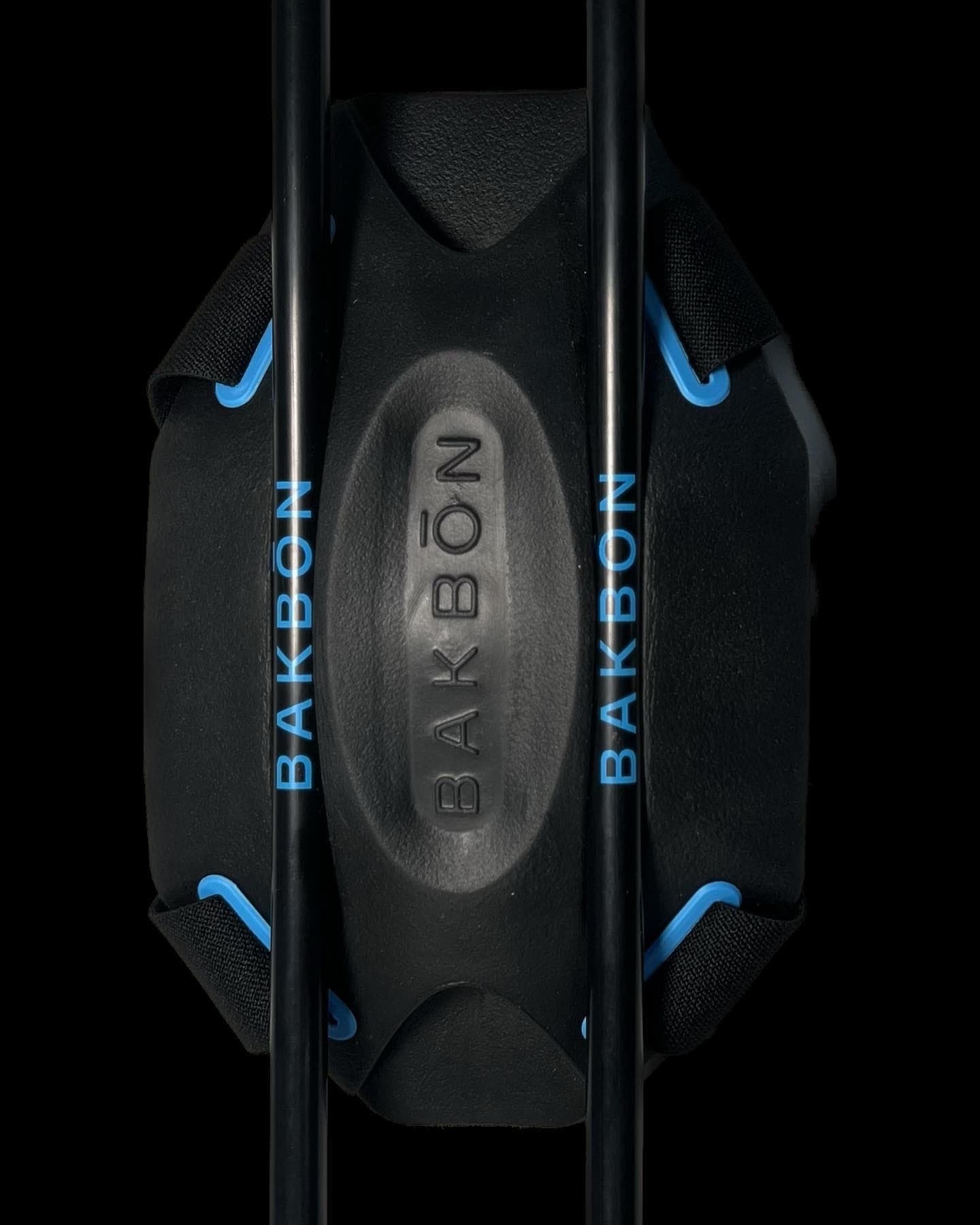
The molded thoracic chassis contours to the mid-back exactly where the dowel sits against the shoulder blades. A single carbon-fiber pole extends above the head and below the waist — the same cervical-to-sacral references your PT was trying to give you. Cross-body straps lock the whole thing hands-free so you can practice during a yoga flow, a golf warm-up, a desk hour, or a walk.
How to use BAKBŌN as a dowel replacement
- —Week 1: 10 min/day, seated and standing only. Do not try to 'correct' — just feel where the contact points are.
- —Week 2: 15 min/day. Add 5 minutes of slow walking while wearing it.
- —Week 3: 20 min/day. Layer in whatever movement practice you already do — yoga, walking, barre, desk work.
- —Week 4 onward: drop to every other day. By this point you'll find neutral without the device.
The dowel was always a good idea. It was just designed for a world where you stood still for twenty minutes at a stretch. We don't live in that world anymore. BAKBŌN is the same cue for the life you actually have.