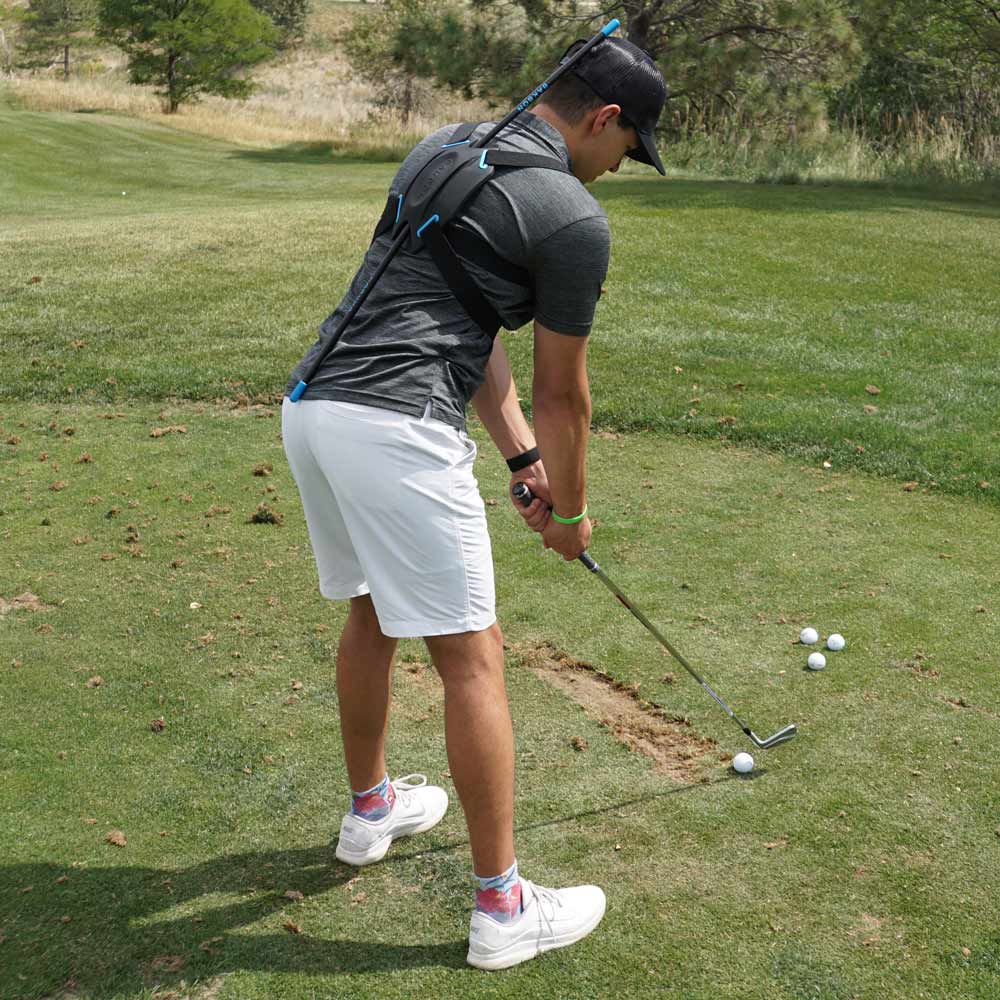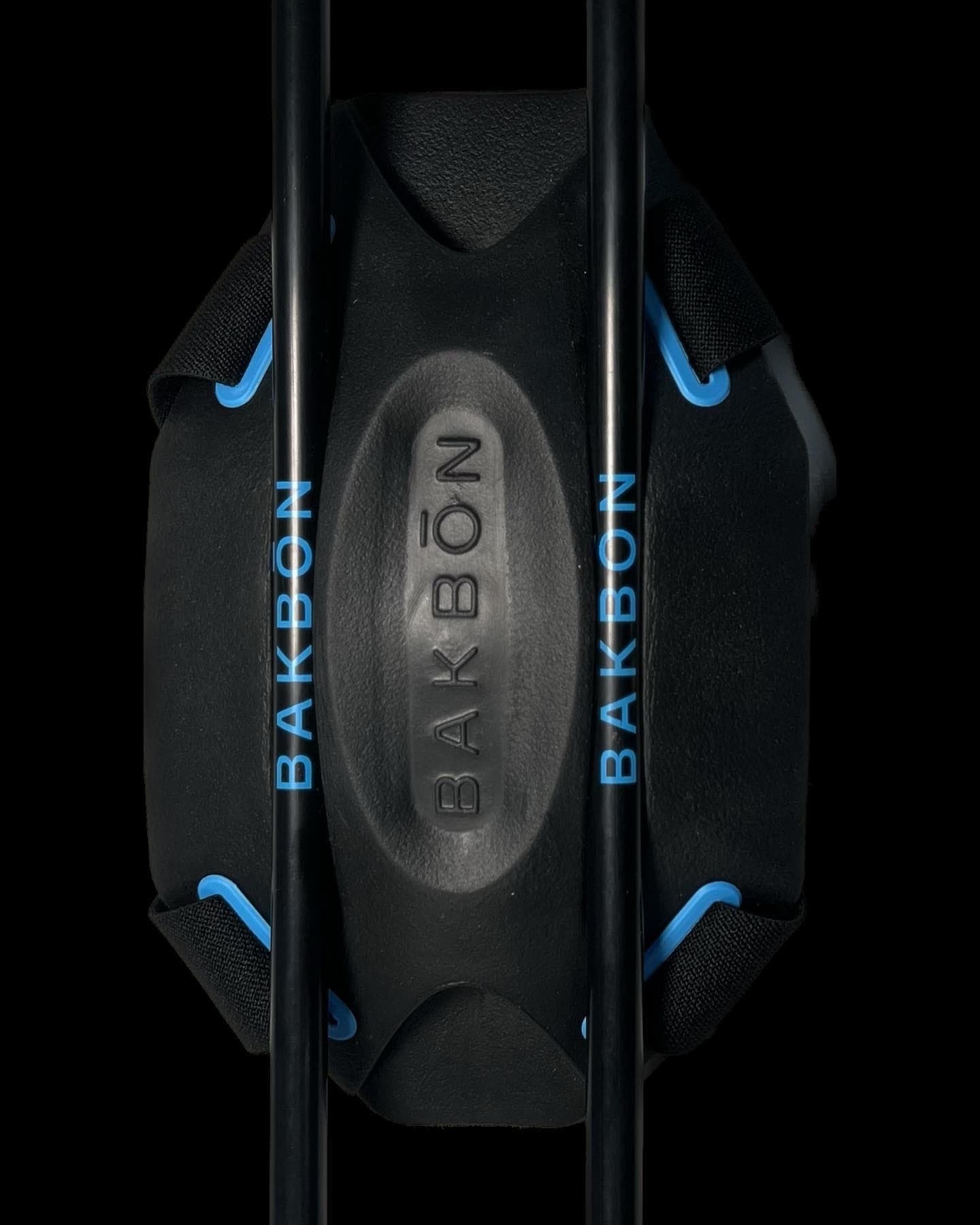
We take an unusual position in the posture wearable category. We don't claim to cure back pain. We don't claim to correct kyphosis. We don't claim to eliminate forward head posture. What we claim is narrower and, we think, more honest: BAKBŌN teaches you what neutral spine feels like so you can train yourself out of the pattern.
This page documents what the peer-reviewed literature actually supports, what it doesn't yet support, and where BAKBŌN's mechanism fits. If you're a clinician evaluating whether to recommend the device, the evidence is cited here. If you're a patient, you can decide what to believe about the device by reading the same studies your PT reads.
What the evidence supports
Five claims are well-supported by current peer-reviewed literature. We'll make these explicitly on the site; the others we won't.
- —Claim 1 — Proprioceptive training improves body awareness and motor control. Frontiers in Rehabilitation Sciences 2022 systematic review.
- —Claim 2 — Tactile cueing at anatomical landmarks reduces postural sway. Rabin et al. 2008 and PNAS follow-on work.
- —Claim 3 — External attentional focus generally outperforms internal focus for motor learning in novices. Wulf 2013 meta-review plus ~100 follow-on studies.
- —Claim 4 — Strengthening plus postural correction reduces forward head angle, rounded shoulders, and hyperkyphosis in Upper Crossed Syndrome. Sepehri et al. 2024, BMC Musculoskeletal Disorders (22-study SR+MA).
- —Claim 5 — A 6-month strengthening and posture training program meaningfully reduces Cobb angle in 60+ adults with hyperkyphosis. SHEAF trial — Katzman et al., Osteoporosis Int 2017, effect sizes 0.60–0.89.
What the evidence doesn't yet support
Wearable posture biofeedback is a young research area. Short-term proprioceptive awareness benefits are documented; long-term structural outcomes remain preliminary. A 2026 MDPI systematic review of wearable posture biofeedback concluded exactly this — short-term alignment benefits are real, long-term claims need more data.
We will not claim BAKBŌN cures back pain. We will not claim it reverses kyphosis on its own. We will not claim posture devices eliminate the need for strengthening exercise. Nothing in the consumer posture wearable category — including BAKBŌN — has that level of evidence yet. Any company telling you otherwise is overclaiming.
Why epistemic honesty is the positioning
The cheap posture-brace category on Amazon overclaims. The smart-wearable category overclaims and then bricks when the company shuts down. We'd rather tell you exactly what the literature supports, name what it doesn't, and commission the studies that would let us say more. A pilot study partnership with the Johns Hopkins orthopaedic PT network is underway. Pre-print target: 12 months.
Primary citations
- —GBD 2021 Low Back Pain Collaborators. Lancet Rheumatology, 2023.
- —Mahmoud et al. Relationship between forward head posture and neck pain: meta-analysis. 2019 (n=2,339).
- —Rabin et al. Light touch and postural stability. 2008.
- —Wulf G. Attentional focus and motor learning: a review of 15 years. 2013.
- —Sepehri et al. Strengthening and postural correction for Upper Crossed Syndrome: systematic review and meta-analysis of 22 studies. BMC Musculoskeletal Disorders, 2024.
- —Katzman et al. SHEAF trial — spine-strengthening and posture training in hyperkyphosis. Osteoporosis International, 2017.
- —Cole & Grimshaw. Biomechanics of the golf swing: L4–L5 loading and spine-angle faults. 2016.
- —Frontiers in Rehab Sciences. Proprioceptive training outcomes: systematic review. 2022.
- —Katzman et al. Hyperkyphosis prevalence and outcomes in older adults — multiple cohort studies.
- —MDPI 2026. Wearable posture biofeedback: a systematic review of efficacy evidence.
If you're a clinician who wants to co-author a pilot, or a journalist who wants the statements above verified against their sources, contact research@bakbonhealth.com. We'll send the PDFs.